

At a Glance
- Concerns over potential loss of Green Belt land in Southend
- Questions raised about infrastructure and sustainability
- Importance of protecting green space for health and wellbeing
- Calls for better local consultation and balanced development
A s a resident of Southend for over 60 years, I have witnessed significant changes to our city.While concerns about the High Street and seafront are often discussed, a more pressing issue is now emerging: the potential loss of Green Belt land to large-scale housing development.
Southend is currently under pressure to accommodate substantial numbers of new homes, driven largely by national housing targets. While the need for housing is widely acknowledged, the question is not simply how many homes are required, but whether Southend is an appropriate place to deliver them at this scale.
The city’s geography presents clear limitations. Bounded by the Thames Estuary to the south and constrained by natural features such as the River Roach to the north and Foulness Island to the east, Southend has little room to expand without fundamentally changing its character. This is not a question of reluctance to grow, but of physical constraint.
Density and Sustainability Concerns
Southend is already a densely populated area, ranked 7th in the UK outside London in a 2008 assessment. Further increases in density, particularly on protected land, raise concerns about sustainability and quality of life.
Infrastructure is central to this debate. Picture congestion at Cuckoo Corner, the Anne Boleyn roundabout and, dare I say it, Queensway with extra traffic. Without significant, clearly funded infrastructure improvements, it is difficult to see how large-scale development can be accommodated without worsening existing pressures. This applies equally to healthcare, education and other essential services.
Value of Green Space
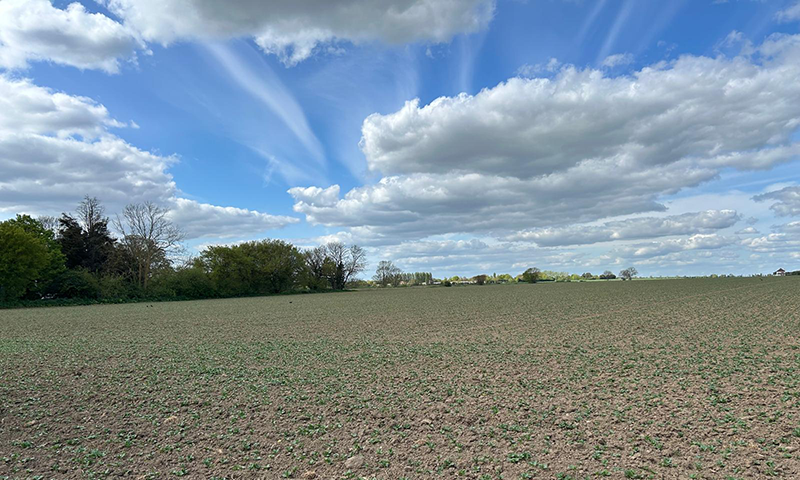
Equally important is the role of open space. This city enjoys nature, try and park in Belfairs Woods on a Sunday morning. There is substantial evidence linking access to green space with improved mental and physical health. This Government’s own evidence, from Natural England and the Department of Health and Social Care, is clear: access to nearby green space is essential for mental health, reducing anxiety, depression, and pressure on public services. The loss of such land is not easily mitigated, and once it is gone, it is gone permanently.
Exceptional Circumstances Questioned
Green Belt release is only allowed in “exceptional circumstances”. Housing need is often cited, but should not be an automatic override, especially given reports that around 1.4 million homes with planning permission remain unbuilt.
For me, this comes down to balance. I am not against development, but it cannot come at the expense of the people already living here. Our roads and services are already under strain, and it is difficult to see how large-scale growth can be supported without clear, deliverable improvements to infrastructure.
Lack of Local Engagement
What concerns me most is the lack of meaningful local engagement. The Local Plan includes consultation stages such as Regulation 18, yet neither I nor my neighbours, despite living adjacent to a proposed development, have been directly consulted. That raises serious questions about how effective this process really is.
If decisions of this scale are being made, those most affected should not have to go searching for information. They should be properly informed and given a genuine opportunity to have their say.
Sustainable Development Needed
This is not an argument against new housing. It is an argument for proportionate, realistic and sustainable development. Southend’s constraints are not hypothetical; they are visible in its geography, its road network and its limited open space.
I recently attended a meeting hosted by MP Bayo Alaba, where he spoke about the challenges facing the local economy. While he does not have a direct role in local planning decisions, he made an interesting point about the “£1 circulation” in the area, how often money is spent locally before it leaves. It is a simple idea, but an important one
It made me reflect on how different the High Street felt in the 1960s and 70s, when it was busy and thriving. Southend was less densely populated then, yet the town centre was stronger. That suggests that simply increasing the number of residents is not, on its own, the answer.
Impact on Local Economy
People need a reason to spend their time and money locally. If increased development leads to more congestion, limited access, and a less pleasant environment, it risks having the opposite effect, discouraging the very activity needed to support local businesses.
The decisions made now will shape Southend for generations. Growth must be balanced with protecting what makes the city a desirable place to live, with proper regard for long-term local interests.
By Glen Ward
Concerned
Local Resident