

At a Glance
- Sticky black tar deposits appeared along several beaches from Canvey to Clacton.
- Approximately 25,000 kg of bitumen spilled into the River Thames at Gravesend in an industrial incident.
- Pollution travelled downstream, impacting the Thames Estuary and North Sea coast beaches.
- Concerns raised about delayed public communication and lack of transparency.
- Calls for independent, regular water testing and public access to results.
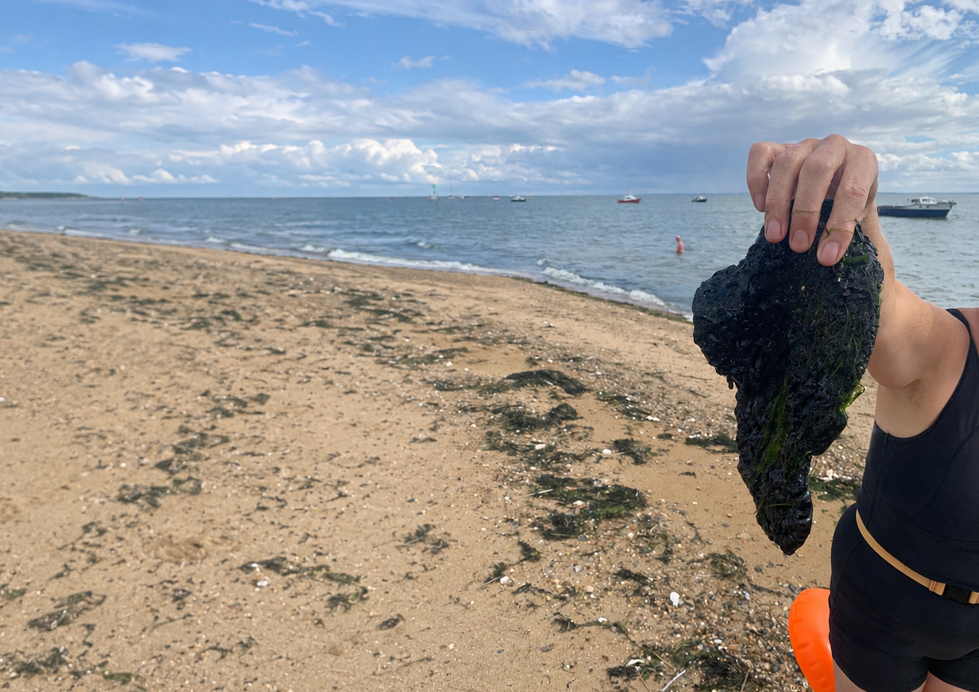
Last August Bank Holiday, Alex found a lump of unusual sticky black tar on Thorpe Bay Beach. The lump was mixed with sand, seaweed, and other debris. After posting a photo of it on Facebook, members of Southend Against Sewage (SAS) reported finding similar deposits on local beaches. Surprisingly, the sticky black tar had washed up along a large stretch of coast from Canvey to Clacton, indicating it was not ordinary beach litter.
Bitumen Spill Confirmed
We reported the situation to the Environment Agency, who confirmed that the Port of London Authority (PLA) was organising a clean-up, though few details were initially available. After a week, a member of the public informed us of an industrial incident at Imperial Wharf in Gravesend that had occurred nearly two weeks earlier.
We contacted the PLA’s Director of Operations, who confirmed that a significant quantity of bitumen—about 25,000 kilograms—had entered the River Thames. The tidal movements had carried the pollution downstream much further than initially estimated.
When Pollution Travels Further
What began as an incident at Gravesend became a wider pollution event, impacting the Thames Estuary and out along the North Sea coast. This raised important questions about community protection when pollution travels many miles before discovery, and concerns about communication between the organisations responsible for managing our waterways.
The PLA stated that relevant authorities were notified, but it took much longer for this information to reach the public. The incident drew national media attention, including coverage by the BBC, The Observer, The Londoner, and the Southend Echo.
Further investigation by Andrew Kersley of The Londoner, using Environmental Information Regulations, revealed the Port of London had recorded 177 petrochemical spills since 2014, including 106 in the previous five years.
Transparency and Accountability
This issue is not about assigning blame but about transparency, accountability, and ensuring residents have timely access to information. The bitumen spill demonstrated how pollution can travel rapidly and how difficult it can be for communities to understand its impact.
Our message is clear: test the water regularly, publish the results, and allow the public to make informed choices. Routine bathing-water testing offers important data but does not provide the full picture of pollutants present in an estuary with a long industrial history.
Protecting Our Waterways
We are calling on the Port of London Authority to fund independent testing of the River Thames and Thames Estuary for heavy metals and other pollutants. Results should be shared publicly and made easy to find.
Our waterways belong to everyone. They are part of Southend’s identity, environment, and economy, and deserve proper protection.
By Shah & Alex Haider
On behalf of Southend Against Sewage
southendagainstsewage.org