

At a Glance
- Southend faces significant pressure due to plans for up to 2,000 new homes on Bournes Green.
- Transport congestion, overcrowded schools, and strained healthcare services highlight the city’s challenges.
- Without growth in jobs and infrastructure, commute times and service demands will worsen.
- The article argues for infrastructure-led growth to ensure Southend’s sustainable future.
Southend Is Our Home
Southend is where we live, raise our families, work, go to school and build our communities. But our city is already under enormous pressure. We see it every day: congested roads, overstretched services, pressure on schools and healthcare, and infrastructure struggling to keep pace with the people who already live here. The question now is what kind of Southend we want to leave for the next generation?
Growth Plans and Geographic Challenges
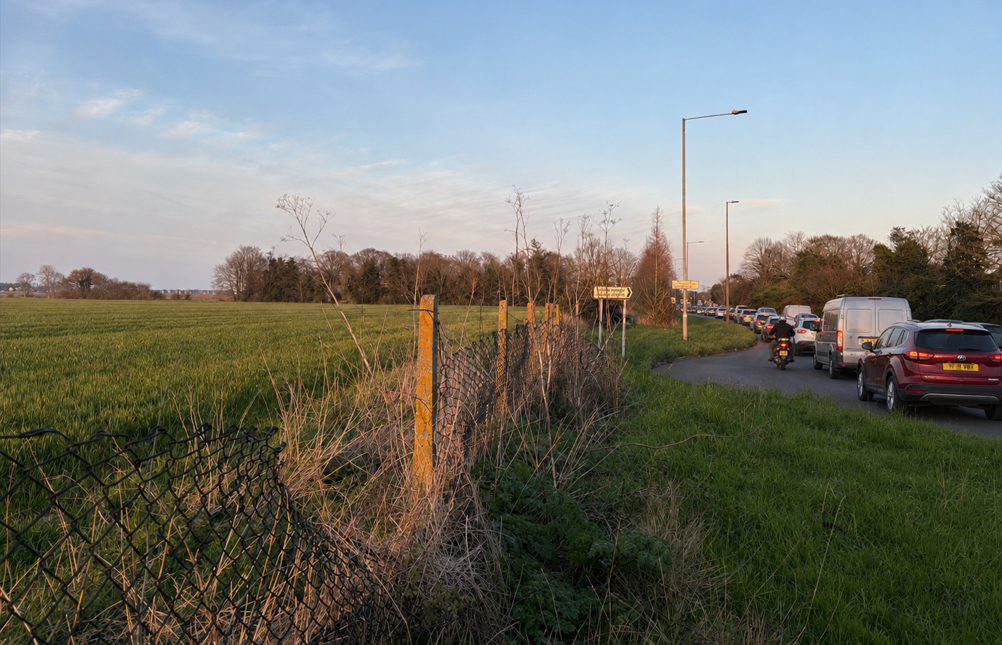
Bournes Green is open agricultural land and Green Belt on the eastern edge of the city. The current proposal is for up to 2,000 new homes, alongside other development. It would bring thousands of additional residents into an already densely populated part of Southend. This is not simply a debate about houses; it is about capacity, sustainability and whether we are prepared to put further pressure on infrastructure that is already struggling.
Southend’s geography makes this particularly important. The Thames Estuary forms a barrier to the south and east, while the A127 and A13 provide the principal east-west highway connections. Southend has around 4,336 people per square kilometre—almost ten times the English average—making it one of the most densely populated local authorities in the East of England. Compare that with the London Borough of Havering, which has around 2,330 people per square kilometre. Southend is already accommodating a large population within a very constrained footprint.
Transport Pressures
Transport is one of the clearest pressures. The Council’s 2025 evidence identifies high levels of congestion on the A13 and A127, with parts of the network operating near or at design capacity. Major highway improvements are difficult and potentially prohibitively expensive because of Southend’s densely developed geography. Southend already has around 30,000 people commuting out of the city every day. Now imagine adding 15,000 households. At the current average of 1.09 cars per household, that could mean another 16,350 cars associated with those households.
Journey Times Could Soar
Even if only a fraction of those vehicles use the strategic network during peak periods, thousands of additional journeys would be competing for space on roads that are already under pressure. The consequences are not theoretical. Southend’s historic transport modelling projected that increased demand could produce A127 journey-time increases of 50–75%, with average peak speeds falling to just over 10 mph. These are historic projections, not a forecast for today, but they demonstrate how quickly journey times can deteriorate when demand rises on a constrained network.
A 30-minute cross-city journey becoming 38 or 45 minutes may sound like a small change, but over 220 working days, an additional 30 minutes a day amounts to around 110 hours a year—or three working weeks spent in traffic.
Infrastructure Must Come First
This is the heart of the Southend Can’t Cope argument. It is not an argument against growth. It is an argument for responsible, infrastructure-led growth. The Council itself says new infrastructure should be delivered “first or at pace” with development. So before adding thousands of new homes, we should be asking: Where are the roads? Where are the school places? Where are the GPs? Where is the drainage capacity? Where are the jobs? And when will that infrastructure be delivered?
A promise of infrastructure is wholly different from infrastructure that is already working. Once Bournes Green is built on, this open agricultural land cannot simply be recreated.
Existing Infrastructure Pressures
The accompanying Infrastructure Delivery Plan identifies infrastructure that is already near or exceeding capacity, particularly in health and education, and recognises the need for additional investment in transport, drainage, healthcare, and schools as the city grows.
Growth also requires jobs. Southend currently has around 78,000 jobs. The Council’s Local Plan seeks approximately 7,500 additional jobs by 2040. Yet, the Office for National Statistics (ONS) data shows only around 5,000 net additional jobs between 2010 and 2024. Housing growth without corresponding employment growth risks creating even more commuting and further pressure on our transport network.
We are not saying “no” to Southend’s future. We are saying that Southend’s future must be one that the city can cope with—one that we can be proud to leave to the next generation.
by Shah & Alex Haider
On behalf of Southend Against Sewage
southendagainstsewage.org