

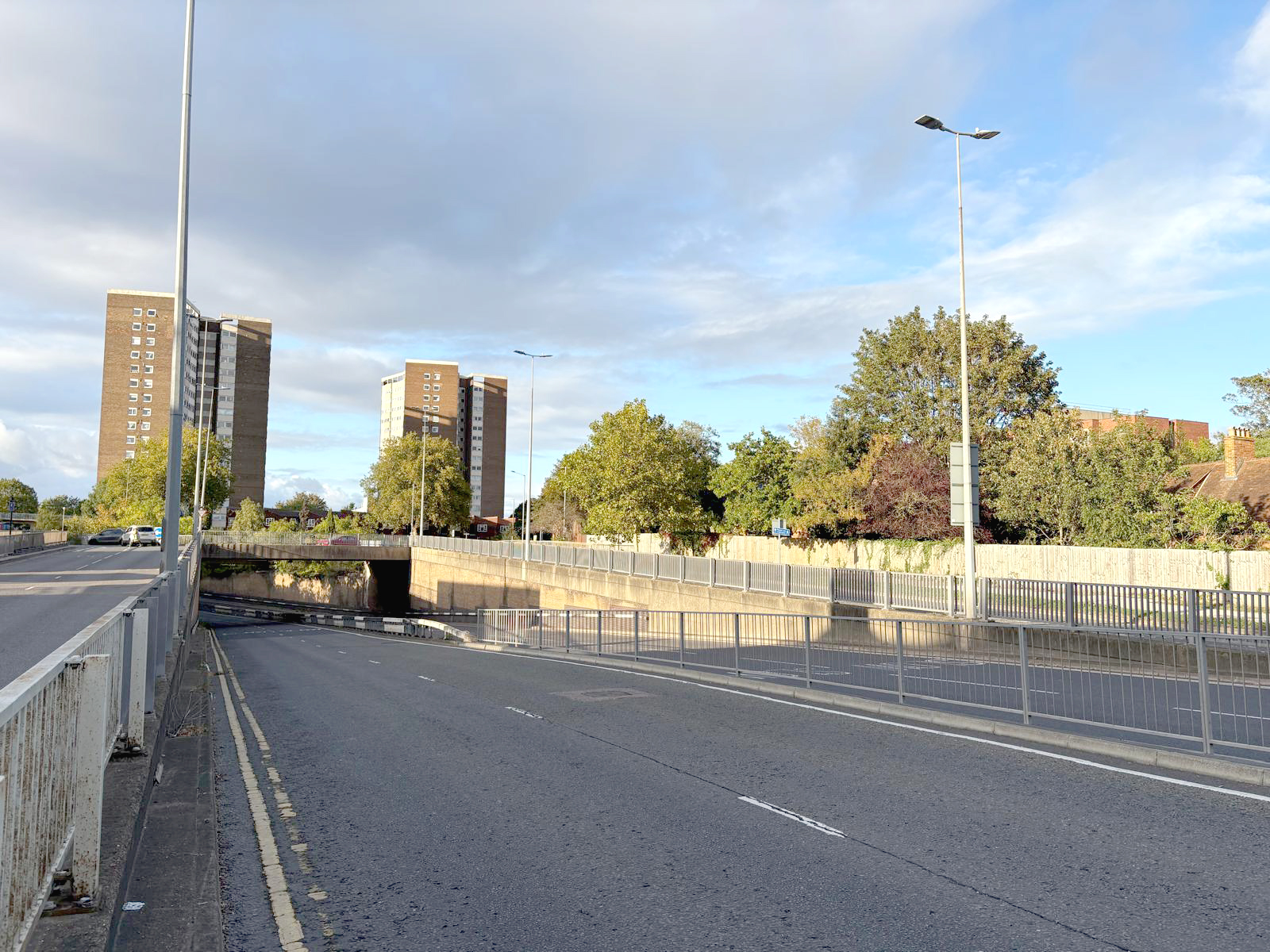
For more than a decade, Queensway has been at the heart of Southend’s most ambitious regeneration project.
The plan to transform this key gateway between the seafront and the town centre has gone through many twists, turns, and delays, leaving residents questioning how we reached the point where the underpass is finally being filled in.
Here’s an overview of the key moments that shaped the journey to where we are today.
Early Plans and Big Promises (2015–2018)
The project began in 2015, when the council prepared plans to compulsorily purchase 53 flats and 72 retail and residential units to make way for 1,200 new homes. By 2017, a £300m plan was unveiled promising 1,300 homes, including 441 affordable units. A two-day consultation was held, but many residents opposed the new roundabout design and the removal of the traffic underpass, citing fears about congestion, parking, and safety. In 2018, the council secured a £15m bid to help fund the regeneration, and computer-generated images showed tree-lined boulevards and open spaces. Consultants were brought in, but some councillors argued that residents’ views were being ignored.
Swan Housing and the Expansion of the Project (2019–2020)
In 2019, Swan Housing was chosen as the council’s development partner, and the scheme grew to 1,600 homes (500 affordable), later rising to 1,750 homes at a projected cost of £575m. Despite continued objections, the council confirmed in January 2020 that the underpass would be closed to make way for the scheme, which now included 612 affordable homes, 400 for social rent. Swan Housing promised work would begin by early 2021.
Rising Costs and Partner Problems (2021–2023)
By 2021, costs were climbing, designs had changed, and there were concerns about the loss of local GP surgeries, increased traffic, and capacity for essential services like schools.
The financial viability of Swan Housing came under scrutiny, leading to a merger attempt with Orbit Group, which later pulled out. In 2022, Sanctuary Housing briefly partnered with Swan but also withdrew, leaving the council as the only partner.
By 2023, delays meant there was still no start date. Despite a £40m price tag to fill in the underpass, the project was struggling to deliver on its promises.
A Changing Council, A Shifting Plan (2023–2024)
In May 2023, the Conservatives took control of the council and began rethinking the project. By late 2023, the scheme was back on the drawing board as Sanctuary Housing withdrew and the council faced a £30m budget deficit.
In 2024, the new administration revived the 2014 scheme and decided to proceed with filling in the underpass, even without a developer on board to build new housing. Plans include 218 new homes on the Essex Street car park, though parking solutions remain unclear.
2025: The Underpass Work Begins
In August 2025, the council announced that Taylor Woodrow had been appointed to deliver the infrastructure works. Essex Street car park will close to become the contractor base, and the underpass will be removed, along with the footbridge and reduced roundabout.
The council says the works will create a safer, greener route into the town centre, with cycle lanes, pedestrian crossings, and tree-lined streets. They maintain that this is a vital step to unlock future housing, even though no developer is currently confirmed.
Cabinet members have promised regular engagement with residents through the Queensway Matters forum and updates during construction.
A Divided Reaction
Supporters say the project is necessary to regenerate a tired part of the city, create affordable housing, and improve safety for pedestrians and cyclists. Critics argue that without a housing partner, the scheme risks becoming an expensive road project, forcing more traffic through busy roundabouts, causing gridlock, and removing much-needed parking.
by Peter Lovett
Chairman of the Shoebury Residents’ Association