

At a Glance
- Rochford District sees an increase in large-scale planning applications amid growing housing requirements.
- Residents’ groups are becoming more organised and using technology to scrutinise planning proposals.
- New motions aim to give residents a formal role in the planning process alongside officers and consultees.
- The balance between community input and statutory consultation is evolving to strengthen planning decisions.
A Changing Planning Landscape
Across Rochford District, increasingly sophisticated residents’ groups are forming to scrutinise major planning applications. In the past, such groups primarily relied on numbers, local knowledge and the belief that the planning system itself would protect communities from inappropriate development. Today, the picture is very different.
Planning policy is changing rapidly, with Government reforms placing increased emphasis on housing delivery. Further changes to planning committees and decision-making are also likely to affect how councillors and residents can influence applications. Residents’ groups are responding by becoming far more organised.
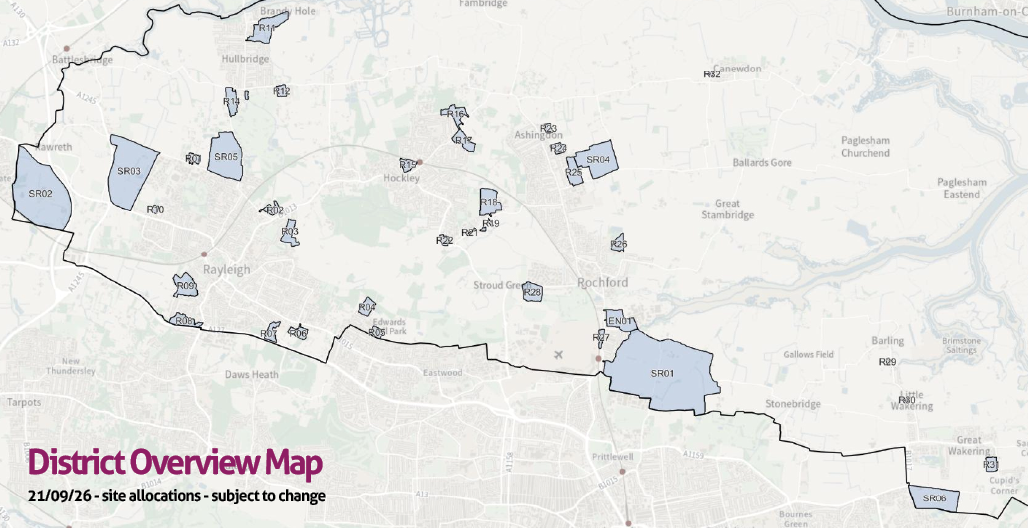
They are using technology to analyse applications, planning documents and technical evidence. There are currently 13 major schemes in the pipeline, some already at appeal. Rochford faces a Government housing requirement approaching 15,000 homes. Meanwhile, Southend and Castle Point have their own housing pressures and challenges.
Trying to determine how many homes should be built on a peninsula three-quarters surrounded by water, using a national formula, illustrates the difficulty of applying a largely mathematical approach to places with very real physical constraints. All three local authorities are wrestling with their Local Plans and the consequences of those housing requirements.
Smarter Community Scrutiny
Residents understand the National Planning Policy Framework, commission professional advice where necessary and identify weaknesses that might previously have gone unnoticed. Most importantly, they know their communities.
They understand the roads, congestion, schools, healthcare pressures, flooding history, drainage, farmland, wildlife, infrastructure and local amenities. They live in these areas every day, and their lived experience is valuable evidence.
Yet there remains a major imbalance in the planning process.
A Seat at the Table
Councillor Angela Sutton recently proposed a motion asking officers to investigate how residents’ campaign groups could have more formal involvement in the evidence-gathering process surrounding major development applications – a seat at the same table as the planning officer and statutory consultees. The motion received unanimous support from all 39 councillors.
This is an important step. It should not be about residents lobbying councillors to predetermine an application. Instead, it should be about creating a structured opportunity for knowledgeable community groups to submit detailed, planning-policy-based evidence to officers responsible for assessing applications and making recommendations.
Residents Adapt to Change
With thousands of homes currently proposed across Rochford District, this change cannot come soon enough. Times are changing. Residents’ groups have evolved to become organised, knowledgeable and evidence-led.
Giving them a meaningful opportunity to contribute their evidence would not weaken the planning process; it should strengthen it. Rochford councillors have recognised that principle.
Now the challenge is to turn that unanimous support into a practical system, and to do so without unnecessary delay.
The Weight of Objections
At a recent residents’ meeting, a senior councillor explained that residents’ objections do not influence a planning officer’s recommendation. Significant weight is placed on responses from statutory consultees, while the number of public objections primarily demonstrates the strength of local concern so councillors can feel residents’ opposition to an application.
This exposes an important issue. Statutory consultees frequently assess applications with desktop analysis, formulae and algorithms. They seldom actually visit the location in question.
Residents, however, possess detailed, site-specific knowledge and evidence capable of questioning or supplementing those assessments. Surely the strongest planning decisions come from testing all relevant evidence? Encouragingly, Rochford councillors now appear to recognise this.
Now Let’s Make it Happen!
By Richard Pryor
South East Essex Green Belters – Chair
thehockleygreenbelter@gmail.com