

At a Glance
- Southend is home to five largely hidden brooks running beneath streets, parks and highways
- Prittle Brook flows from Daws Heath through the city and out past the airport to the River Roach
- Water testing revealed high levels of E.coli, phosphates and nitrates
- Blockages, debris and potential wastewater inputs are threatening the health of the brook
- Calls have been made for action to restore and protect this overlooked blue space
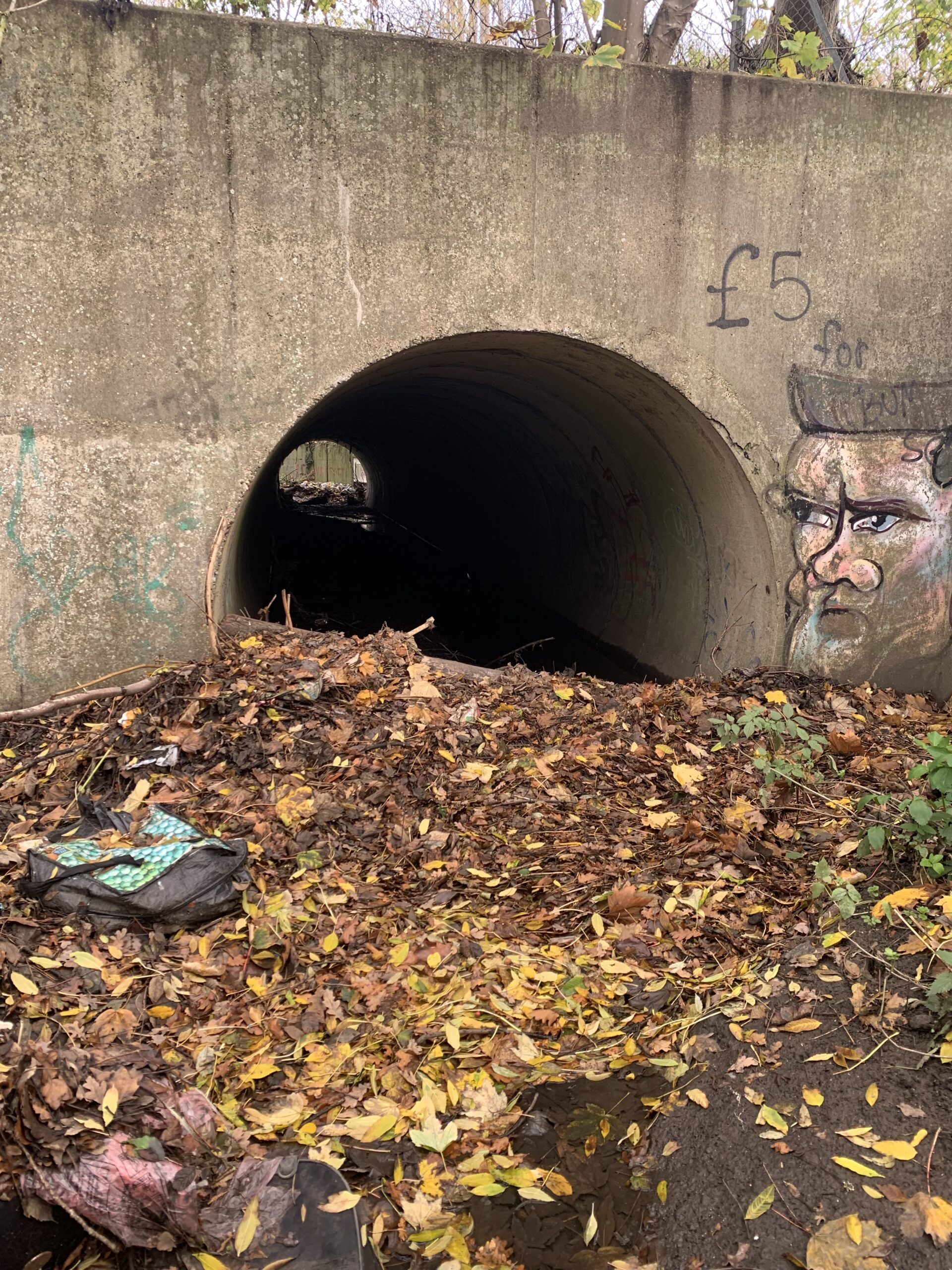
Many people don’t know that Southend has five brooks running through parks, alongside highways and underneath city streets. The Eastwood Brook meanders eastwards out of our city boundaries, its destination, elsewhere. While the Muckinghall Brook descends from the north, towards the Thames in the south. A name change at the Thorpe Hall Avenue roundabout, transforms it to the Willingale Brook. The Shoe in Shoeburyness, goes almost unobserved until it cuts through a Lidl carpark. While the Prittle Brook runs from Daws Heath through the city and escapes out past the airport, to join the River Roach. One might be forgiven for rarely encountering any of these watercourses, for they lie almost entirely interred below street level.

These blue spaces not only had provided running water but recreation. Farm workers would jump in to cool down after working in the fields around the airport during the summer. All that came to an end in the late 1960’s, as more houses were built and increasing wastewater was pumped into the brooks. These blue spaces were co-opted by the local council and water board as infrastructure, to assist in removing rain and wastewater. To this day they continue to move large quantities of water, helping to reduce flooding from Leigh to Shoebury.
Last year, Southend Against Sewage were contacted by several members who shared their experiences of living close to Southend’s various brooks. While some members were worried about flooding to their properties, others noticed the discolouration to the water and an accompanying nasty smell. We listened and decided that we had to take a look ourselves. Our own water tests in April and September revealed high levels of phosphates, nitrates, and E.coli. However, being a large area to investigate we decided to start with the Prittle Brook between Priory Park and Southend Airport.
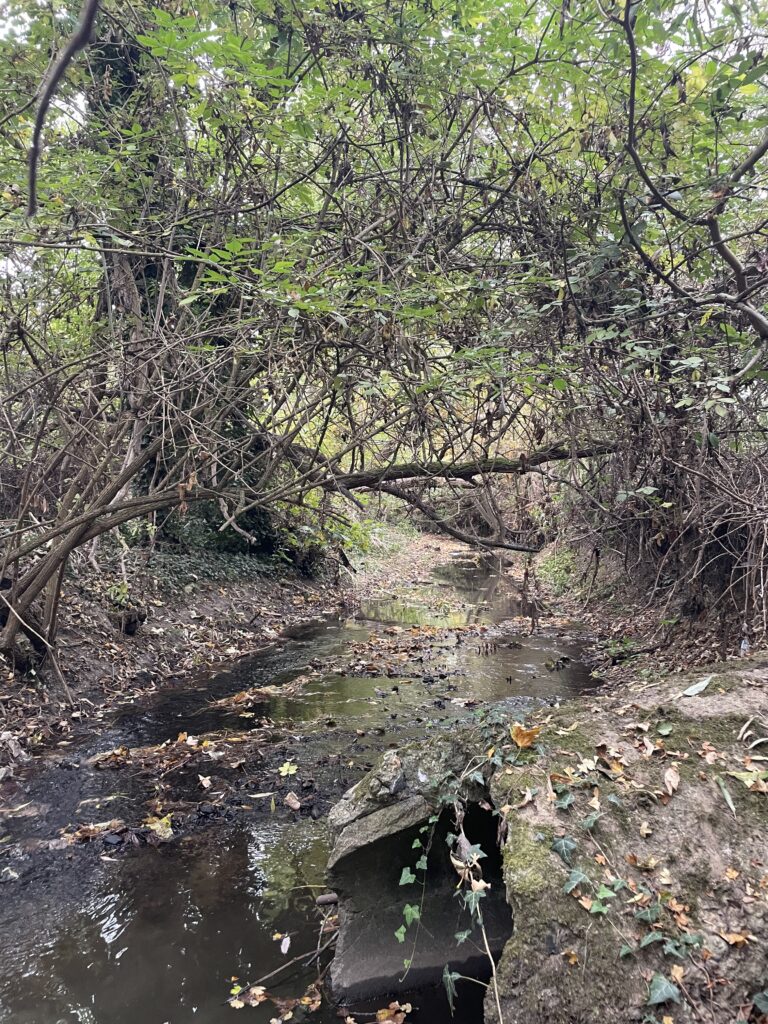
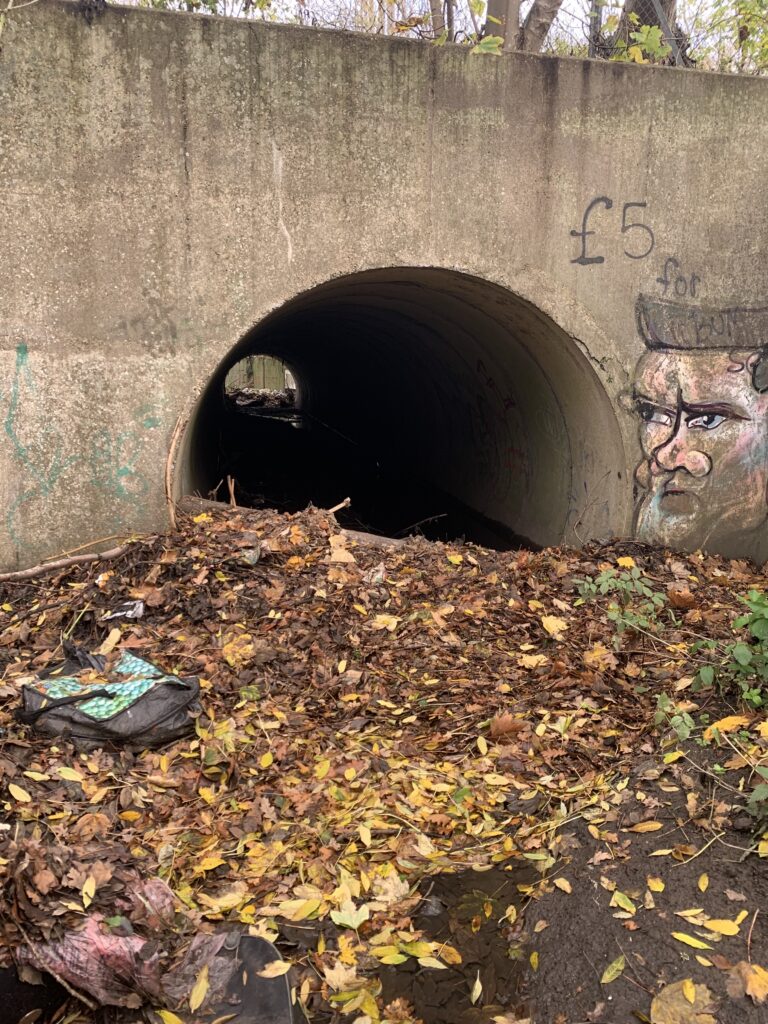
So, equipped with E.coli tests and chest waders we set out to discover what was occurring on the Prittle Brook. We took E.coli tests at different locations. We expected that the results would be higher than in the sea, partly because the brooks contain runoff and wastewater, but the results were often 2,000 to 3,000 colonies/100ml. Which is 4–6 times above the Environment Agency current safety levels. More concerning, we found a large build-up of earth, wood, and accumulated detritus around the Priory Crescent (Three Tunnels) railway bridge. So extensive is this embankment, that two of the three tunnels are almost blocked off. The third was flowing but looked like it might be choked off in time.
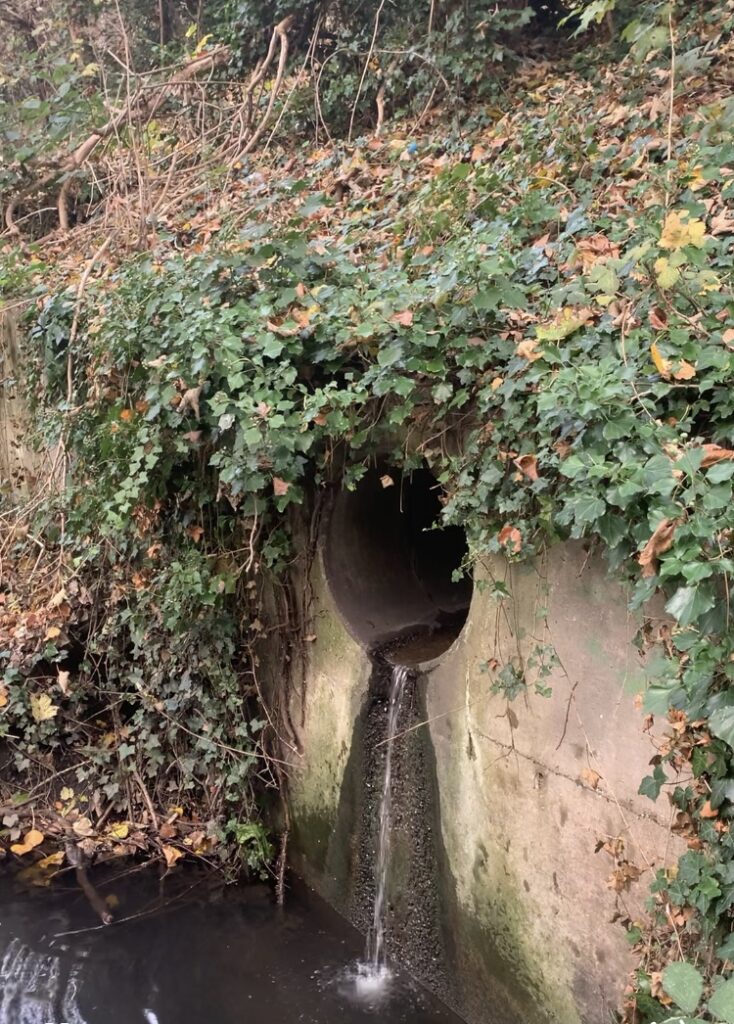
Close to the tunnels Anglian Water have a wastewater treatment facility. This facility manages Southends sewage requirements. Unfortunately, we found a culvert with running water pouring into the brook. Above the pipe, the facility can clearly be seen. Of course, the pipe could originate from another location, but wherever it’s source, it returned several high E.coli results.
A little further up the brook a large tree had fallen, its branches holding back the steady flow. Rubbish had built up, caught on boughs, across the trunk and clinging to its crown. A sad picture of nature forlorn, a managed habitat forgotten.
We wrote to the Environment Agency with our findings, requesting the rubbish be removed, the tunnels cleared, tree felled away from the brook and culvert investigated for E.coli contamination. Finally, we included an offer in helping to clear the brook, with Environment Agency assistance. We are yet to receive a reply.
This relatively small section of Prittle Brook, has numerous problems. The brook while flowing, is slowly choking underneath our rubbish, silt, and waterborne debris. Such environments require management, but being unseen, feels forgotten. Our hope is that with some care, much could be done to increase the health of this blue space and the creatures who reside within.
by Shah & Alex Haider
On behalf of Southend Against Sewage
southendagainstsewage.org
1 Comment
Thank you Shah and Alex for both the article and the water quality tests. What you are doing is really important.
I too have seen (and smelled) polluted-looking water in Prittle Brook on several occasions. It will only stop if people put pressure on the water companies.